
Geomembrane Tree Mats: Long-Lasting Weed Control and Water Savings
If you have a young orchard, you know the scene: only a few weeks after the last weeding, the ground around the young trees is full of weeds again — weeds that drink the very water you work so hard to bring to each tree. Weeding labour gets more expensive every year, and herbicide not only harms the soil but can also damage the tree itself if it touches the trunk.
The solution growers in many countries have relied on for years is simple: a tree mat (also called a weed barrier mat or tree mulch mat) — a square sheet laid around the trunk that stops light from reaching the soil, so weeds can’t grow. In this article we introduce a version of this product that Ara Polymer Nikan makes from 0.5 mm geomembrane sheet — a material whose durability is in a different league from ordinary weed-control fabrics.
What is a tree mat?
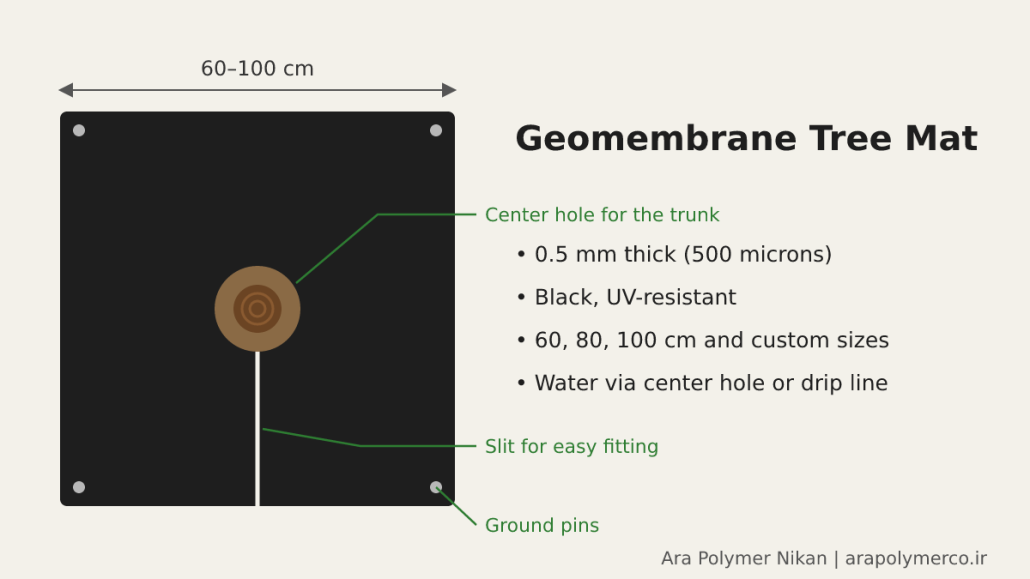
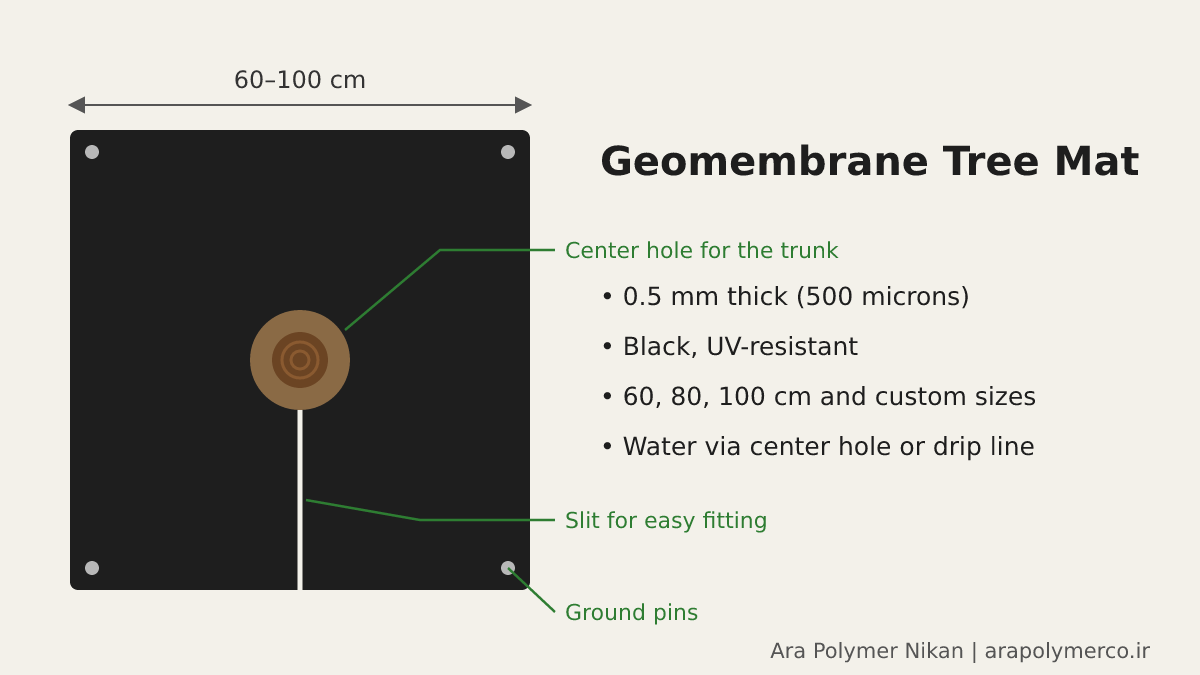
A tree mat is a square sheet with a hole in the middle for the trunk and a slit cut from the edge to the hole. Thanks to the slit, the mat can be fitted around the trunk and laid on the soil without digging up or moving the tree. The edges are then held down with ground pins or a little soil so the wind can’t shift it.
The soil under the mat stays dark: weed seeds don’t get enough light to germinate and grow, so the area around the tree — exactly where young roots take up most of their water and nutrients — stays clean.
Why are weeds around trees such a problem?
- Competition for water: weeds have shallow, dense roots and take up water at exactly the depth where young trees’ roots are active. In the first years, this competition can noticeably slow a tree’s growth.
- Competition for fertiliser: a large share of the fertiliser you give the tree ends up feeding the weeds.
- A haven for pests: dense weed cover around the trunk is an ideal hiding place for rodents and some pests.
- Trunk damage: weeding with a sickle or brush cutter easily wounds the bark, especially on young trees — and wounds are an entry point for disease.
- Recurring costs: hand weeding and spraying aren’t one-off jobs; they come back every season, and so does the bill.
How is a geomembrane tree mat different?
Most square tree mats sold worldwide are made from non-woven polypropylene fabric. They are light and cheap, but they gradually break down and tear under strong sun, and the roots of some persistent weeds can grow through them. Ara Polymer Nikan’s mat, by contrast, is made from 0.5 mm geomembrane sheet — the same family of sheets used to line agricultural ponds, designed to last in direct sunlight for a long time.
| Feature | Fabric mat (non-woven polypropylene) | 0.5 mm geomembrane mat |
|---|---|---|
| Material | Non-woven fabric | One-piece polyethylene sheet |
| Weeds growing through | Possible with some persistent weeds | Practically impossible |
| Sun resistance | More limited | High, thanks to carbon black |
| Durability and reuse | Shorter | Several years, reusable |
| How water reaches the soil | Through the fabric | Via the center hole, drip irrigation or optional perforations |
| Evaporation from the soil | Somewhat reduced | Sharply reduced |
| Washing and moving | Difficult | Easy |
How does water reach the roots? What you need to know
Unlike fabric mats, geomembrane sheet does not let water through. Used correctly, this is the product’s biggest advantage, because the water that reaches the soil is no longer lost to evaporation. To make sure the roots always get enough water:
- Drip irrigation gives the best results: run the drip line or emitter under the mat or into the center hole, so water goes straight into the soil and none is wasted.
- The center hole and slit let water in: if the mat slopes slightly towards the trunk, rain and surface irrigation are channelled to the center.
- Optional perforation: for orchards that rely on rain or flood irrigation, the sheet can be ordered with small, evenly spaced holes so water can also pass through its surface.
- Don’t seal the trunk: leave a few centimetres between the trunk and the edge of the hole so the root collar can breathe and doesn’t stay permanently wet.
On heavy, poorly drained soils where water stands for long periods, talk to our specialists before use so they can recommend the right perforation and size.
Benefits of a geomembrane tree mat
1. Weed control without chemicals
No light, no weeds. You no longer need to spray herbicide around your trees every season: the soil stays healthier, and there’s no risk of chemical damage to young trunks.
2. Serious water savings
In dry and semi-arid climates, such as much of Iran, a large part of the water that reaches the soil surface evaporates before it gets to the roots. Covering the soil around the tree cuts this evaporation sharply and keeps the soil moist for longer — so you can grow healthier trees with less water.
3. Better growth in the first years
With no competition for water and fertiliser and more even soil moisture, a young tree puts its energy into growing roots and branches — exactly what matters most while an orchard is getting established.
4. Lower labour costs
Weeding around hundreds or thousands of trees several times a year is expensive. A mat is installed once and keeps cutting that cost for years.
5. Trunk protection
With a clean area around the trunk, there’s no need to bring a sickle or brush cutter close to the tree — which means fewer wounds on the bark.
6. Durable and reusable
0.5 mm means 500 microns — tens of times thicker than standard agricultural mulch films, which are usually a few dozen microns thick and often tear after a single season. A geomembrane mat can be lifted after several years, washed and reused around another tree.
Specifications of the Ara Polymer Nikan geomembrane tree mat
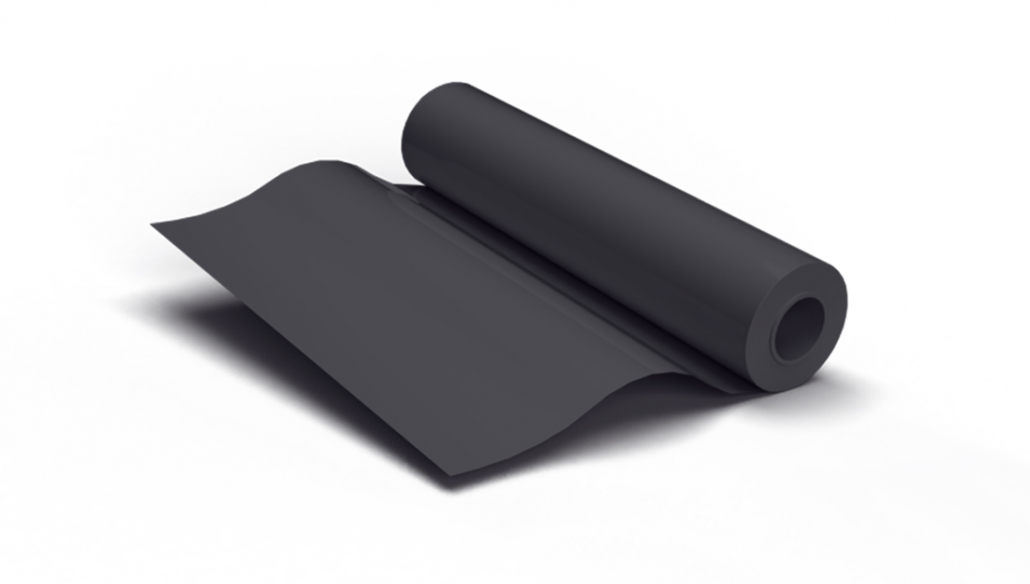
| Material | Polyethylene geomembrane sheet |
|---|---|
| Thickness | 0.5 mm (500 microns) |
| Colour | Black, with carbon black for UV resistance |
| Shape | Square, with a center hole and a slit from edge to center |
| Sizes | 60×60, 80×80 and 100×100 cm, plus custom sizes |
| Custom options | Perforation so water can pass through; center hole size of your choice |
| Fixing | Ground pins or soil over the edges |
Which size should I choose?
As a rule of thumb, the mat should be at least as wide as the tree’s current canopy, or slightly larger, because most of the water-absorbing roots are within that area:
- 60×60 cm: newly planted saplings and shrubs
- 80×80 cm: young trees two to three years old
- 100×100 cm: larger trees, ornamental trees and landscaping
For dense rows or special layouts, the sheet can also be produced in strips or custom dimensions.
Where are tree mats used?
- Newly planted orchards of pistachio, walnut, almond, pomegranate, apple and other fruit trees
- Nurseries and sapling production
- Urban landscaping, parks and highway verges
- Afforestation, green-belt and desertification-control projects
- Ornamental trees and shrubs in gardens and villas
Installing a tree mat in 5 steps
- Clear existing weeds from around the trunk and level the soil as much as possible.
- If you use drip irrigation, put the drip line or emitter in place.
- Open the mat at the slit and place it around the trunk so the trunk sits in the center hole.
- Lay the mat completely flat on the soil and overlap the two edges of the slit slightly so no light gets through.
- Secure the corners and edges with ground pins or a little soil.
Tip: for a more natural look, spread a thin layer of soil, gravel or wood chips over the mat; on hot days this also keeps the mat’s surface cooler.
Care and practical tips
- Check around the trunk every few months; if the trunk has thickened, enlarge the center hole slightly with scissors.
- Occasionally sweep off leaves and soil that collect on the mat, so weed seeds don’t find a place to sprout on top.
- When using orchard machinery, avoid driving wheels or blades over the edges of the mat.
- If you need to move the mat, wash it, let it dry, roll it up and store it in the shade.
Frequently asked questions
Won’t a plastic mat suffocate the tree’s roots?
No, as long as it is installed correctly. The mat only covers the area around the trunk and the rest of the soil stays open; the center hole and slit also allow air exchange. On heavy, poorly drained soils we recommend the perforated version.
Doesn’t a black mat get very hot in summer?
A black mat keeps the soil beneath it slightly warmer, which helps roots become active earlier in spring. In very hot regions, a thin layer of soil, gravel or wood chips over the mat keeps its surface from overheating.
How long does a geomembrane tree mat last?
Geomembrane with carbon black is made to stay in the sun for a long time, and at 0.5 mm it resists tearing and puncture. Used correctly, it lasts for years and can usually be reused.
Is it compatible with drip irrigation?
Yes — in fact a geomembrane mat works best with drip irrigation, because water goes straight to the roots and almost none of it evaporates.
How is it different from agricultural mulch film?
Agricultural mulch films are usually a few dozen microns thick and designed for a single growing season; a geomembrane tree mat is 500 microns thick and made for years of use around trees.
Can it be made in custom sizes and quantities?
Yes. Size, center hole diameter and surface perforation can all be ordered to suit your orchard and the age of your trees. For bulk orders for orchards and landscaping projects, please contact our sales team.
Order a geomembrane tree mat
Ara Polymer Nikan manufactures geomembrane sheet and makes tree mats from the same sheet, in the sizes and quantities your orchard or project needs. To learn more about the material, read What is geomembrane? or see the specifications of our three-layer geomembrane sheet.
For free advice on the right size, a price quote or to place an order, contact our specialists.


Leave a Reply
Want to join the discussion?Feel free to contribute!